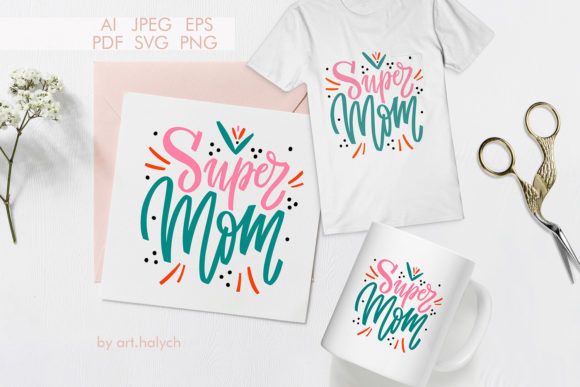
Super Mom Cut File for Crafters
A Designer’s First Look: Friendly, Warm, and Just Right for Handmade Gifts
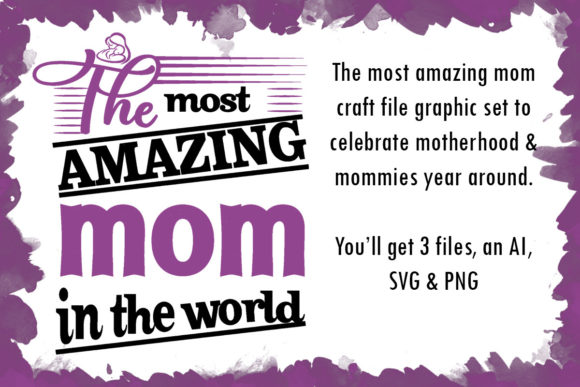
When I opened Super Mom Cut File for Crafters, my first thought wasn’t “Oh, another Mother’s Day quote.” It was, “This feels like something a real mom would actually wear—or proudly display in her kitchen.” The handwritten lettering has gentle curves, relaxed spacing, and a soft weight that avoids looking stiff or overly digitized. It’s not ornate, but it’s intentional—no excessive swirls, no fragile serifs, no tiny disconnected flourishes that vanish under thread. That matters. A lot. Because what looks charming on screen doesn’t always translate to clean, legible embroidery—especially when stitched on cotton twill, terry cloth, or lightweight knit.
Real-World Test: Embroidering It onto a Linen-Cotton Tote Bag
Last week, I used Super Mom Cut File for Crafters for a custom order: a medium-weight linen-cotton tote for a local boutique’s Mother’s Day pop-up. I chose a 4” x 3” layout, centered just below the top seam. With proper tear-away stabilizer and a size 75/11 needle, the satin-stitched outlines held beautifully—even through the subtle texture of the fabric. The letterforms stayed crisp, and the slight variation in stroke width (a hallmark of authentic handwriting) read clearly at arm’s length. Customers didn’t just say, “Cute!” They paused. Smiled. Said, “That’s *exactly* how my kids talk about me.” That kind of resonance is rare—and valuable—for any craft business or Etsy seller building emotional connection with buyers.
Where It Shines—and Where It Needs Thoughtful Handling
Super Mom Cut File for Crafters works especially well for:
- Custom apparel: Sweatshirts, crewnecks, and relaxed-fit tees—particularly when placed on the left chest or lower back.
- Home & nursery items: Tea towels, pillow covers, and baby blanket corners (just avoid dense fill areas near seams).
- Embroidered patches: Its clean silhouette and moderate height make it ideal for sew-on or iron-on patches—no clipping needed around tight corners.
- Holiday and boutique merchandise: It reads quickly, feels personal without being cloying, and pairs effortlessly with neutral or earthy thread palettes.
But be mindful with:
- Small hoop sizes (<4”): The design’s natural width may require slight scaling down—test before hooping.
- Stretchy or thin fabrics (like jersey or voile): Use cut-away stabilizer + topping to prevent puckering and keep letter clarity.
- Dark or textured backgrounds: Avoid placing it directly over heavy embroidery motifs or busy prints—it’s meant to stand alone, not compete.
- Caps and curved surfaces: The shape isn’t inherently cap-friendly; if using on a front panel, opt for simplified versions or adjust kerning manually to avoid distortion.
What It Adds to Your Finished Product—Beyond the Stitch
This isn’t just a machine embroidery design—it’s a quiet brand builder. When stitched cleanly, Super Mom Cut File for Crafters elevates perceived value. Buyers recognize care in execution: balanced stitch density, consistent line weight, and thoughtful spacing between letters. That translates to higher confidence in your handmade product, stronger repeat orders, and better photo appeal for social media or Etsy listings. I’ve watched customers linger longer on mockups featuring this design—especially in black thread on oatmeal linen or navy cotton duck. It reads as warm, grounded, and human—not mass-produced.
Practical Notes Every Embroidery Designer Should Keep Handy
Before stitching Super Mom Cut File for Crafters into your next project, run these checks:
- Test on scrap fabric first—same type, same stabilizer, same thread colors you’ll use for the final piece.
- Review stitch density: If converting to an embroidery file, watch for overlapping satin stitches in tighter curves—they can cause thread buildup or skipped stitches.
- Confirm hoop size compatibility: While the cut file itself is scalable, embroidery software may auto-resize based on your machine’s limits—always verify dimensions post-conversion.
- Inspect small details: Even though it’s minimal, check how the lowercase “o” and “p” render—some converters soften terminals too much.
- Try black-and-white mockups: This design relies on contrast and shape—not color—so grayscale previews reveal clarity issues fast.
- Compare light vs. dark fabric backgrounds: It performs best with high-contrast thread (e.g., charcoal on cream, white on navy), not mid-tone pairings.
- Use appropriate stabilizer: Tear-away for stable wovens, cut-away for knits, and topping for napped or fuzzy fabrics like terry.
- Check licensing terms: Since this is a digital embroidery file sold as part of Crafts and Graphics, confirm whether commercial use is permitted before selling finished embroidered goods or bundling it into digital product kits.
Final Thought: A Design That Serves the Maker—and the Mom
Super Mom Cut File for Crafters isn’t flashy. It won’t dominate a tradeshow booth or trend on TikTok overnight. But it’s the kind of design that earns trust—one thoughtful stitch at a time. It fits naturally into real workflows: quick personalization for a last-minute gift, consistent branding across a boutique’s holiday collection, or reliable digital embroidery file inventory for an Etsy seller launching seasonal bundles. For embroidery designers and creative entrepreneurs who prioritize authenticity over ornamentation, it’s a quietly powerful tool. And sometimes, the most effective design is the one that lets the person wearing it—or giving it—shine brightest.