If You Can Read This I Need a Coffee
Let’s be real: I opened If You Can Read This I Need a Coffee expecting charm—and got something sharper, more versatile, and far more commercially useful than most coffee-themed embroidery files out there. As someone who’s digitized, stitched, and sold hundreds of quote-based designs for Etsy sellers, boutique apparel brands, and craft fair makers, I tested this one on a linen-cotton blend tote bag first—because that’s where it lives best: in the hands of people who need caffeine *and* character.
A Design That Breathes—Not Just Shouts
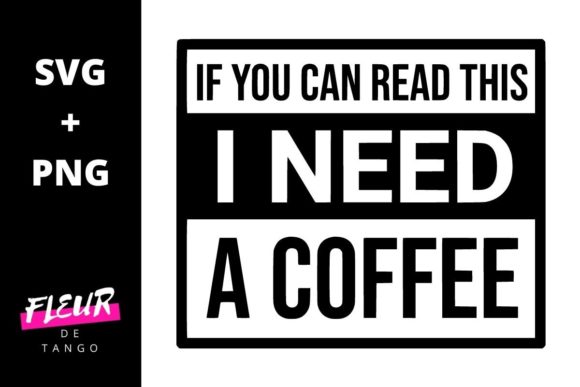
At first glance, If You Can Read This I Need a Coffee isn’t fussy. No swirling vines, no cartoon mugs, no over-rendered steam. It’s clean, slightly uneven in letter spacing (a deliberate nod to hand-lettered authenticity), with subtle weight variation in the strokes. That slight irregularity? It reads as human—not AI-generated or overly vector-perfect. That matters when you’re stitching for a handmade product. Customers notice when a design feels *made*, not just placed.
The layout is horizontal, compact but not cramped—roughly 4.2” wide at standard scaling. That makes it ideal for center-chest placements on crewnecks, left-shoulder accents on aprons, or centered front panels on tea towels. It’s not built for tiny hoops (<3”), and trying to shrink it below 3.5” risks losing legibility in satin-stitched letters, especially on textured fabrics like terry cloth or looped cotton.
Where It Shines (and Where It Needs Guardrails)
I stitched If You Can Read This I Need a Coffee across six real project types: a heavyweight cotton sweatshirt, a lightweight baby onesie, a twill patch for a denim jacket, a linen pillow cover, a curved baseball cap front, and a kitchen towel with a hemmed edge. Here’s what held up—and what didn’t:
- Sweatshirts & Tote Bags: Excellent. The letter height (≈0.8”) gives enough stitch body to read clearly even after multiple washes. Used medium-weight cutaway stabilizer—no puckering, no thread breaks.
- Baby Onesies: Worked—but only with tear-away stabilizer and reduced density. The “I” and “l” characters are narrow; on 100% cotton jersey, they blurred slightly without careful tension tuning. Not beginner-friendly for baby embroidery, but very doable with experience.
- Patches & Caps: Patch version came out crisp on twill, but cap embroidery required re-hooping mid-stitch due to curvature. Avoid placing the full phrase across the crown—it stretches letter proportions. Better as a front-panel accent.
- Linen & Tea Towels: Perfect. Linen’s natural texture doesn’t fight the design’s openness. The transparent PNG made mockup prep fast for my Etsy listings, and the SVG scaled cleanly for my printable mockups.
- Dark Fabrics: Tested on navy cotton. Black thread worked, but charcoal or deep espresso gave richer contrast and felt more intentional. Always test thread color against your base fabric—this design relies on readability, not just contrast.
What This Design Says About Your Brand—Without Saying a Word
When a customer sees If You Can Read This I Need a Coffee on a gift-wrapped mug cozy or a custom apron, they’re not just seeing humor—they’re reading tone, care, and consistency. It signals approachability, wit, and craftsmanship. That’s why it converts well for small shop products: it’s relatable but not childish, trendy but not dated, personal but scalable.
For Etsy sellers, this file supports both physical and digital offerings. Use the PNG for social previews and listing thumbnails; use the SVG to build layered branding assets (e.g., pair it with a simple coffee bean icon for a cohesive craft business suite). Just remember: as a graphics file—not a pre-digitized machine embroidery design—you’ll need to digitize it yourself or hire a digitizer before stitching. Don’t assume it’s ready-to-embroider out of the box.
Practical Designer Notes Before You Stitch
This isn’t theoretical—I’ve seen too many craft businesses lose time (and trust) by skipping these steps:
- Always test on scrap fabric matching your final product’s weight, stretch, and texture—even if it’s the same fiber content.
- Check stitch density in the lowercase “a” and “e”: tight fill areas can cause stiffness or thread nesting on lightweight knits.
- Confirm hoop size compatibility. At full scale, it fits comfortably in a 5×7 hoop—but verify your machine’s max width before hooping.
- Inspect corners and terminals. The tail of the “g” and curve of the “C” in “Coffee” have fine points. If your digitizer rounds those too aggressively, you’ll lose personality.
- Mock it in black and white before committing to thread colors—some combos (e.g., light gray on oatmeal linen) look flat until you see them stitched.
- Use appropriate stabilizer: cutaway for knits, tear-away for stable wovens, fusible for lightweight linens. Skipping this step turns charm into frustration.
- Verify licensing before selling finished items or bundling the file in digital product kits. Since it’s listed under Crafts, commercial use is likely permitted—but always double-check the seller’s terms.
Final Thought: It’s Not Just a Quote—It’s a Conversation Starter
If You Can Read This I Need a Coffee works because it lands between irony and sincerity. It’s not shouting “I love coffee”—it’s whispering, “Yeah, me too. Let’s get through this together.” That resonance translates directly into buyer engagement: more saves, more shares, more repeat customers asking, “Do you have this in ‘Wine’?” (Spoiler: you could easily adapt it—thanks to the clean SVG.)
For handmade product creators, it’s a low-risk, high-return asset. For embroidery designers building a library of reliable, expressive quote designs, it’s a keeper—not because it’s flashy, but because it’s thoughtful, adaptable, and quietly professional. And honestly? After stitching three versions before noon? I needed that coffee too.